
What Makes an Offering Banner "Devotional"?
What Makes a Banner Devotional?
The word devotional may bring to mind a religious object—something created for prayer, worship, or sacred ritual. But devotion has a much wider meaning. At its heart, devotion is simply the act of giving our care, attention, and love to something that matters.
A devotional object might honor a person or ancestor whose presence continues to shape your life. It might hold the memory of a particular place, season, or passage of time. It could celebrate a quality you want to strengthen within yourself, such as courage, tenderness, patience, or resilience.
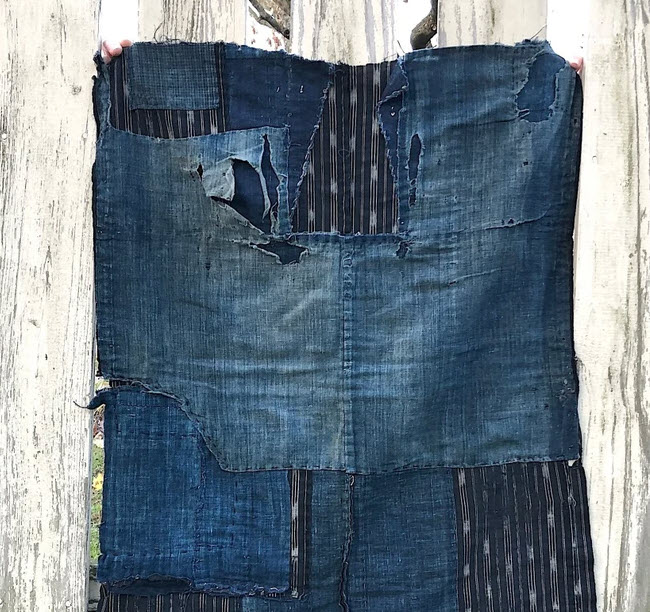
Japanese Boro Banner
Your banner might also carry a hope, a promise, an expression of gratitude, or an intention for the future. It might acknowledge something that has been lost, preserve something you want to remember, or give form to something you are still calling into being.
A banner becomes devotional through the attention we give it.
It is not simply decorated; it is considered. It is made slowly and intentionally, with images, colors, textures, words, and objects chosen because they carry meaning. A faded photograph, a fragment of handwriting, a scrap of cloth, or a small found object may appear ordinary to someone else, yet hold an entire story for you.
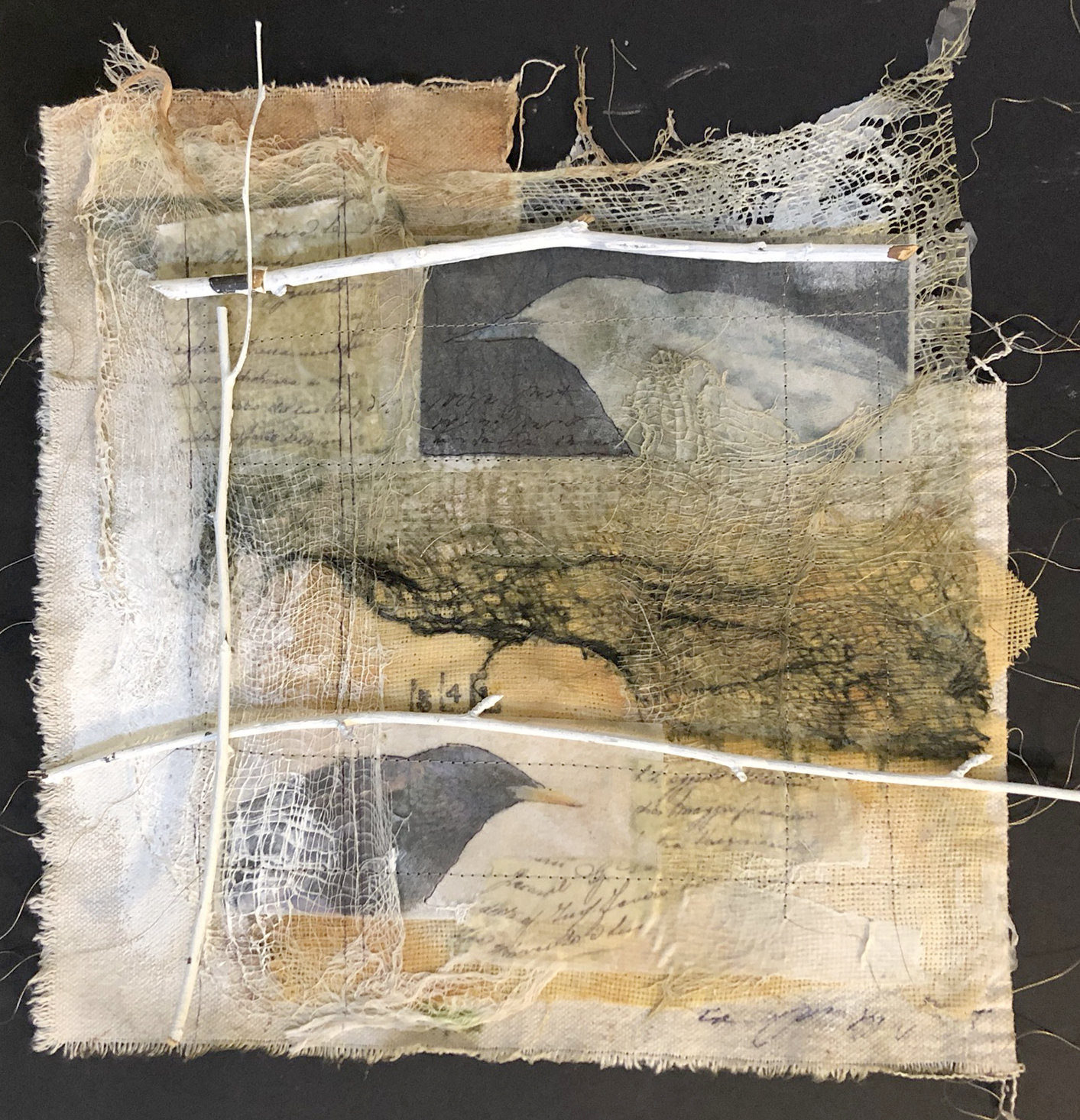
Lyn Belisle, Birds Banner, 2021
Even materials without an obvious personal history can become meaningful through the way you use them. A piece of red thread might suggest connection, protection, or the continuation of a family line. A translucent layer might speak of memory or something partially revealed. A small pocket could hold a wish, a name, or a private message. Repetition might become a form of meditation: a row of stitches, a pattern of marks, or a word written again and again.
The act of making is part of the devotion. As you sort, arrange, bond, stitch, wrap, and attach, you are spending time with the subject of your banner. You are allowing meaning to develop through your hands rather than asking yourself to understand everything before you begin.
Your banner does not need to explain its story completely. It can remain mysterious, symbolic, and deeply personal. Some meanings may be immediately visible; others may be known only to you. There is no requirement that the finished piece be solemn. Devotion can be joyful, playful, grateful, hopeful, or celebratory. What matters is the sincerity of the attention behind it.
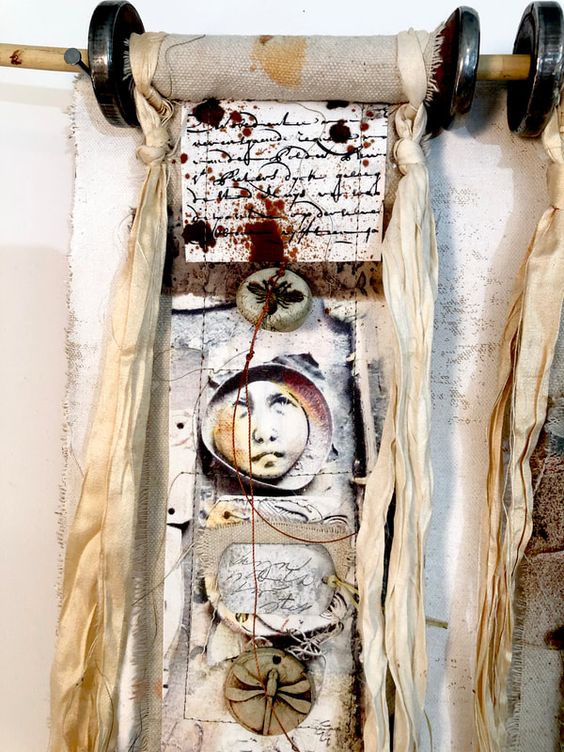
Lyn Belisle, The Pilgrims Scroll (detail) 2020
As you begin, consider this question:
What do you want to honor, remember, protect, thank, or send forward?
You do not need to have an immediate or perfectly formed answer. Let the question stay with you as you gather your materials. Notice which photographs call to you, which colors feel connected to your subject, and which fragments seem to belong together.
Perhaps you want to honor someone who came before you. Perhaps you want to remember a place that changed you, protect something tender, thank someone whose kindness remains with you, or send forward a wish for yourself, another person, or the wider world.
This question can become the heart of your Offering Banner. It will help guide your choices without limiting them. Each layer can become a response—not necessarily in words, but through image, texture, color, symbol, and form.
When we make with this kind of attention, the banner becomes more than a collection of beautiful materials. It becomes a witness, a container, and an offering.